Free to play MMORPG games: signs of a predatory cash shop
Free to play MMORPG games fail the player when the cash shop stops selling optional items and starts selling control over progression. The block is not always visible at level 1.
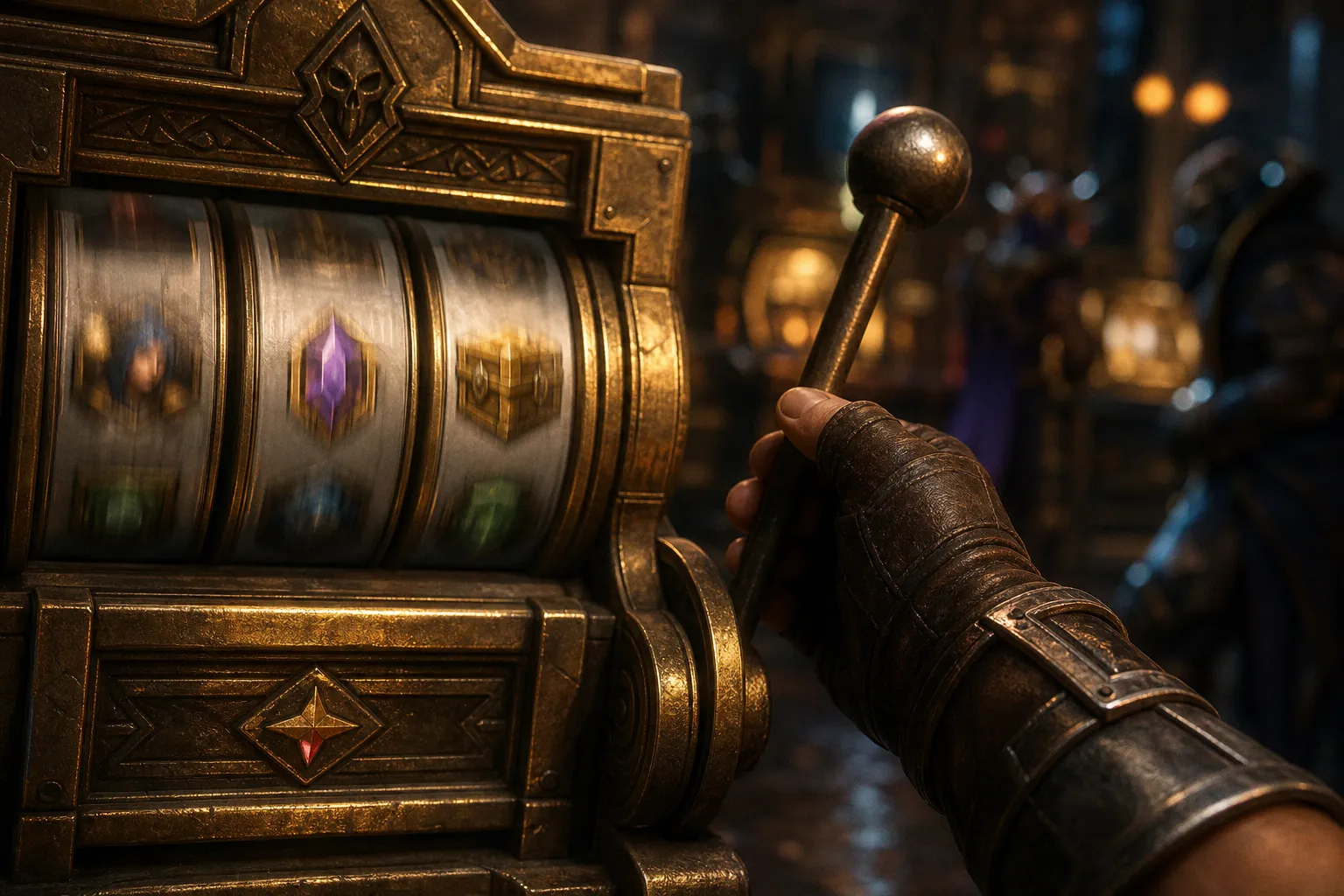
The correct test is not whether a game has monetization. A cash shop is not a defect by itself. The test is whether payment buys direct power, removes engineered friction, or bypasses limits that were placed there to create pressure. Use that distinction. It separates non pay to win MMORPG games from systems that convert progression into a payment funnel.
Define the boundary: convenience is not the same as power
Start with the payload the shop delivers. Ignore the label. “Starter pack,” “heroic bundle,” “value chest,” and “limited launch supply” are wrappers. Read the contents.
A convenience item changes access speed or interface load. A power item changes combat outcome. The cleanest free-to-play model sits near 0% power-gating: no combat stats, no exclusive upgrade materials, no locked enhancement tier that requires payment. The opposite model approaches 100% P2W: power exists behind a paywall and cannot be reasonably obtained through free play.
Use the following classification table before investing time into any F2P MMORPG cash shop.
| Shop item type | Low-risk implementation | Predatory implementation | Practical test |
|---|---|---|---|
| Cosmetics | Skins, mounts, emotes, housing decor with no stats | Cosmetics with hidden stats, set bonuses, combat auras | Remove the skin. If power changes, it is not cosmetic |
| Boosters | XP catch-up below current cap, account-wide unlocks after grind | XP boosts required to reach viable progression speed | Compare free levelling time against paid levelling time after midgame |
| Inventory upgrades | Optional storage expansion for collectors | Base storage tuned to overflow during normal questing | Run three quest chains. If mandatory materials exceed storage, pressure is engineered |
| Gear bundles | Outdated gear for new players | Current-tier gear, enhancement stones, PvP-ready items | Inspect whether bought gear beats dungeon or raid drops |
| Battle Pass rewards | Cosmetics, currency caps, side materials | Exclusive weapons, stat pets, accelerated rank power | Compare free and premium tracks at the same season level |
| Gacha pulls | Cosmetic-only random rewards | Characters, gear, pets, runes, or artifacts with combat value | If random pulls affect DPS, healing, mitigation, or PvP rating, classify as power sale |
A common false positive is the subscription-style convenience pack. Some browser MMOs and free online MMORPG clients sell a monthly option with faster travel, extra auction slots, or more character slots. That can still be acceptable if the unpaid account remains mechanically complete. The line is crossed when the paid account has a higher damage ceiling, a higher enhancement ceiling, or exclusive access to functional equipment.
Do not audit the shop by price. Audit it by consequence. A cheap stat advantage is still a stat advantage.
The first technical pass should inspect five system parameters:
1. Stat source: Identify every source of attack, defense, health, critical chance, movement speed, cooldown reduction, and resistance. If any primary stat source routes through premium currency, tag it.
2. Upgrade path: Map the enhancement chain. Look for paid-only catalysts, protection items, failure recovery tokens, and tier unlocks.
3. Acquisition parity: Determine whether free players can obtain the same item through play. “Technically possible” is insufficient if the grind is tuned beyond normal retention windows.
4. Market transfer: Check whether paid items can be sold to free players. A player-to-player market can soften a shop, but it can also convert cash into gold into power.
5. Competitive relevance: Inspect PvP, guild wars, territory control, raids, and leaderboards. If paid advantages affect ranked or scarce rewards, the cash shop is not neutral.
Power-gating hides inside progression math
Predatory monetization rarely announces itself as “buy damage.” It is usually embedded in systems that look like normal MMORPG scaffolding: enhancement, awakening, fusion, refinement, ascension, imprinting, sockets, pets, companions, relics, cards, constellations. The names vary. The function is the same. Each layer adds a multiplier, and the shop sells access to the multiplier.
The evaluation method is simple. Locate the bottleneck item. Then locate its source.
If the bottleneck drops from routine play, the system may be grind-heavy but still playable. If the bottleneck appears mainly in premium packs, event bundles, paid passes, or limited gacha banners, the system is monetized power. If failed upgrades destroy materials unless a premium protection item is used, the shop is not selling convenience. It is selling risk removal for a system designed around loss.
Common power-gating signatures:
- Enhancement protection sold for premium currency: The free route includes downgrade, breakage, or reset. The paid route absorbs failure.
- Current-tier gear in direct purchase bundles: The shop bypasses dungeons, crafting, raids, or world bosses.
- Paid pets or companions with stats: Movement pets are cosmetic-adjacent. Combat pets with percentage bonuses are not.
- VIP levels with combat modifiers: Extra daily entries may be tolerable. Extra attack, defense, drop power, or PvP damage is a direct advantage.
- Limited upgrade materials tied to events: The event looks seasonal. The reward table functions as a paid progression gate.
- Leaderboard rewards amplified by spend: If spending improves rank, and rank grants exclusive power, the game has a compounding P2W loop.
The compounding loop is the critical defect. A paying player buys power, uses that power to secure better rewards, then receives more power. The unpaid player is not merely slower. The unpaid player is structurally downstream.
For browser MMOs, this often appears in compressed form because sessions are shorter and interfaces are optimized around claims, timers, and red notification markers. The design pushes the player into a routine: collect, upgrade, hit limit, open shop, remove limit. Treat every red-dot economy as suspect until the underlying caps are mapped.
Time-gating and energy systems: the 24-hour reset trap
Time-gating is not automatically predatory. MMOs use lockouts to regulate economies, queue health, and raid pacing. The problem appears when the lockout is paired with a paid bypass. Then the cooldown is no longer a pacing tool. It is a monetization valve.
Mobile and browser-based MMOs often use 24-hour reset cycles for energy, dungeon entries, resource farms, expedition timers, crafting queues, and daily reward claims. This makes the pressure predictable. The player logs in, spends the daily allocation, sees blocked progression, and receives an offer to refill.
Evaluate the gate using this sequence:
1. Identify the capped activity. Is it combat, crafting, gathering, dungeon entry, loot claiming, stamina, or PvP attempts?
2. Measure the free daily output. How many meaningful upgrades can be made without paying?
3. Inspect refill access. Can the player buy more entries, energy, speedups, or instant completions?
4. Check competitive coupling. Does bypassing the cap affect rankings, guild contribution, territory rewards, raid eligibility, or market supply?
5. Verify catch-up mechanics. Does the game include rest bonuses, weekly caps, or account-wide recovery for missed days?
The danger is not the timer. The danger is the paid bypass attached to the timer. A dungeon lockout that applies to everyone is a pacing rule. A dungeon lockout that can be cleared with premium currency is a paid advantage, especially if dungeon drops affect PvP or leaderboard placement.
Energy systems deserve separate treatment. They restrict play itself. In a free-to-play MMO, this changes the contract. The game is not just selling acceleration; it is selling permission to continue. If the energy pool blocks normal questing or core combat after a short session, the system should be classified as aggressive. If it blocks only repeat farming after a complete daily loop, the risk is lower.
A clean model lets the player keep playing but limits reward extraction. A predatory model blocks the activity and sells access back to the player.
Inventory restrictions: pressure by capacity failure
Inventory monetization is one of the oldest F2P MMORPG pressure systems because it is quiet. It does not look like P2W at first. It looks like clutter.
The test is whether the default inventory supports normal play. If routine questing, crafting, and dungeon drops overflow the bag before a player can reasonably reach storage, vendor, salvage, or auction systems, the limitation is designed as friction. Selling bag space after designing that friction is not neutral.
Inventory pressure usually appears through three channels:
- Material fragmentation: The game splits resources into too many item IDs: ore grades, herb variants, event tokens, enhancement dust, shards, seals, tickets, fragments, keys, and currency containers.
- Bound-item duplication: Items cannot stack because some are character-bound, some account-bound, and some tradable. The result is artificial slot consumption.
- Temporary event payloads: Events flood the inventory with boxes, partial tokens, exchange items, and limited-use materials that cannot be consolidated.
A moderate inventory shop can be acceptable when the base capacity supports the intended loop and paid storage serves collectors, traders, crafters, and alt-heavy accounts. The red flag is early overflow. If the game creates a storage problem before the player understands the economy, it is monetizing confusion.
Run a basic capacity audit during the first two hours and again after entering the first repeatable dungeon loop:
1. Complete three quest chains without deleting materials.
2. Run the first repeatable dungeon or equivalent instanced activity.
3. Open crafting, enhancement, and event menus.
4. Count how many occupied slots are mandatory progression materials.
5. Count how many occupied slots are unclear containers, fragments, and tokens.
6. Inspect storage expansion pricing and whether free expansion exists.
7. Check whether auto-loot, remote storage, material storage, or salvage requires payment.
If auto-loot is sold separately, classify it as quality-of-life. If the game’s drop rate and material volume make manual looting or manual deletion painful, that quality-of-life item may be part of an engineered problem. This distinction matters in any F2P MMORPG cash shop guide because quality-of-life can be legitimate or coercive depending on the base system.
Inventory is not a cosmetic surface. It is an operating system for progression. Restrict it hard enough, and the shop controls the game loop.
Gacha, pity systems, and the real cost of a guaranteed reward
Gacha systems introduce randomized acquisition. In MMORPGs, the risk rises when the randomized payload affects combat. A costume gacha is one category. A weapon, character, mount stat, pet skill, rune, artifact, card, or companion gacha is another.
Do not evaluate gacha by the headline pull price. Evaluate the guaranteed outcome. Many systems include a “pity” mechanic that grants a desired item after a certain number of failed attempts. That can reduce variance, but it can also normalize large spend thresholds. Exact pity rates are often difficult to verify because developers may disclose probabilities in ways that obscure the practical cost of a target item. Treat incomplete disclosure as a risk factor.
Use this calculation model:
- Pull cost: Premium currency required for one roll or ten-roll batch.
- Currency package mismatch: Whether store bundles force overbuying because package sizes do not match pity thresholds.
- Duplicate requirement: Whether the item must be pulled multiple times for awakening, limit break, star rank, or skill unlocks.
- Banner duration: Whether the player has enough free currency during the banner window to reach guarantee.
- Power relevance: Whether the reward affects damage, healing, defense, mobility, economy, or ranked performance.
- Rollover rules: Whether pity carries to the next banner or expires.
- Rate transparency: Whether probabilities are visible in-client and understandable without external spreadsheets.
The worst configuration is straightforward: low rates, non-carrying pity, duplicate requirements, short banners, and combat-relevant rewards. This is not just monetization. It is a pressure architecture built around scarcity and loss aversion.
A safer configuration is also straightforward: cosmetic-only rewards, visible rates, pity rollover, no duplicate power requirement, and enough free currency to participate without expecting completion. That model can still be expensive for collectors, but it does not block character viability.
The whale economy sits behind many of these systems. In many F2P economies, a small paying segment can sustain a large portion of revenue; estimates often place heavy spenders in the low single digits, commonly around 1–5% of players. That does not mean non-paying players are irrelevant. Healthy matchmaking, trade, guild recruitment, social density, and world activity depend on a broad unpaid population. A predatory shop damages that population first, then the game’s long-term stability.
Battle Pass tracks: subscription replacement or power conveyor
The Battle Pass model has become a common alternative to a traditional subscription. It usually contains a free track and a premium track. The acceptable version sells predictable seasonal value without breaking the combat model. The defective version uses the premium track as a hidden power conveyor.
Inspect the track at equal levels. Do not compare level 1 free against level 50 premium. Compare level 20 free against level 20 premium, then level 50 against level 50, then final tier against final tier. The question is whether premium status changes power acquisition.
Low-risk Battle Pass contents:
- Character skins with no stats.
- Mount skins with no movement advantage.
- Titles with no combat attributes.
- Emotes, profile frames, housing items, dyes, and nameplates.
- Catch-up materials that do not exceed the normal weekly ceiling.
- Account services that do not affect ranked combat.
High-risk Battle Pass contents:
- Exclusive weapons or armor.
- Upgrade stones required for current-tier enhancement.
- Pets, companions, cards, relics, or artifacts with stats.
- Extra dungeon entries tied to progression materials.
- Premium-only currency that buys power.
- Rank skips that unlock power rewards faster than free players can obtain them.
The accelerated progression issue needs precision. Acceleration is not always P2W. If a new player can reach current content faster through a pass, and the end-state remains equal, the system may be closer to catch-up. If the pass lets paying players exceed normal weekly or seasonal progression caps, it becomes power acceleration. If that extra power applies in PvP, guild wars, or scarce-resource competition, it is pay-to-win.
Also inspect expired rewards. A Battle Pass with exclusive combat items that never return creates permanent account disparity. A player who missed the season cannot obtain the same functional tool. That is worse than a simple paid booster because it creates archival power: an advantage locked in time.
Cosmetic-only shops and the acceptable monetization profile
A free MMORPG needs revenue. The issue is not revenue. The issue is whether the revenue model modifies the rules of play. Cosmetic-only shops are widely accepted because they sell identity, not output. The clean implementation keeps cosmetics mechanically inert and avoids hidden modifiers.
A strong non pay to win MMORPG profile usually has these traits:
1. No combat stats in cosmetics. Skins, outfits, wings, mounts, and titles do not alter performance.
2. No paid-only upgrade ceiling. Free players can reach the same gear tier and enhancement level through play.
3. No paid bypass of competitive caps. Weekly raid, PvP, dungeon, or territory limits apply equally.
4. Transparent reward probabilities. If random rewards exist, rates are visible and the payload is not required for viability.
5. Reasonable base storage. Normal play does not collapse into deletion management.
6. Market controls. Premium currency cannot be converted into unlimited gold, materials, or ranked advantage without restriction.
7. Battle Pass neutrality. Premium tracks deliver cosmetics or bounded catch-up, not exclusive power.
8. Playable unpaid loop. A free account can complete the core loop without constant timer refills, forced bag purchases, or stat deficits.
This profile does not require a shop to be generous. It requires the rules to remain stable. The player may spend for appearance, convenience, collection, or account options. The player should not need to spend to maintain basic combat parity.
When comparing the best free to play MMORPGs, use the cash shop as a systems document. It exposes the developer’s priorities faster than marketing copy. A shop full of skins, account services, and transparent seasonal cosmetics suggests one model. A shop full of upgrade protection, VIP stats, limited gacha banners, and entry refills suggests another.
Evaluation protocol before committing to a server
Use this procedure before investing weeks into a character, guild, or economy. It is written for free to play MMORPG games, but it also applies to browser MMOs, gacha-connected RPGs, and free Steam games with persistent multiplayer progression.
Step 1: Inspect the shop before level 10
Open every shop tab. Do not wait until the tutorial ends. Record categories, not prices:
- Gear
- Upgrade materials
- Protection items
- Pets or companions
- Mounts
- Cosmetics
- Currency packs
- Inventory/storage
- Dungeon entries
- Energy or stamina
- Battle Pass
- VIP or membership
- Gacha banners
If the shop hides tabs until later levels, tag that as incomplete disclosure. It may be harmless. It may also delay the monetization reveal until after sunk time is established.
Step 2: Identify every paid item that changes numbers
Search for direct stat language: attack, defense, HP, penetration, resistance, crit, haste, cooldown, damage reduction, drop rate, movement speed, gathering yield, crafting success, enhancement success. Drop rate and crafting success require special handling. They may look economic, but in an MMO economy they can convert into power.
If the item changes a number that affects combat, progression throughput, or competitive reward access, classify it as functional.
Step 3: Map the first hard wall
Every MMORPG has friction. Find the first wall that stops natural progression. It may be gear score, dungeon entries, enhancement failures, stamina, inventory, quest difficulty, crafting level, or PvP bracket imbalance.
Then identify the offered solution. If the solution is play-based, the system may be grind-oriented. If the solution is paid, the wall is a monetization surface.
Step 4: Test the unpaid daily loop
After unlocking dailies, run one full reset cycle without spending premium currency. Track:
- Time until energy depletion.
- Number of meaningful upgrades earned.
- Inventory overflow events.
- Dungeon entries used and blocked.
- Currency gained versus upgrade costs.
- Paid prompts shown after failure or depletion.
- PvP performance against similarly levelled accounts.
One cycle is not enough to judge a full economy, but it exposes the system shape. A fair F2P model makes the unpaid loop feel bounded but complete. A predatory model makes it feel interrupted.
Step 5: Check endgame evidence
Early game is often clean. Endgame carries the monetization payload. Before committing, inspect community discussions, patch notes, leaderboards, marketplace listings, and guild recruitment requirements. If guilds require paid pets, specific gacha units, VIP levels, or premium pass completion, treat that as operational evidence.
For broader context on evaluating web-accessible games without downloads, a practical reference point is this browser games guide. Use it to separate access convenience from progression fairness; those are different systems.
Step 6: Decide by failure mode
Do not ask whether the game is “free.” Ask how it fails when you do not pay.
- If it fails by making your character weaker than paid players in competitive systems, reject it.
- If it fails by blocking normal play through energy or entry refills, reject it unless the capped loop is optional.
- If it fails by filling inventory during normal progression and selling the fix, treat it as high-risk.
- If it fails by locking current-tier power behind gacha, reject it.
- If it fails only by limiting cosmetics, collection speed, or account comfort, the model is likely acceptable.
Final decision rule
A predatory cash shop converts money into power, removes friction that the design intentionally creates, or sells bypasses to limits that define progression. The surface may be a Battle Pass, gacha banner, inventory expansion, VIP tier, energy refill, or enhancement bundle. The wrapper is irrelevant. The payload decides the classification.
Use a strict standard. Free to play MMORPG games can be fair, stable, and worth long-term play when payment stays outside combat parity. Once the shop controls stats, caps, upgrade safety, or competitive access, the game is no longer selling optional support. It is selling the operating system of progression.